
 Emir Bardakçı
Redmi officially unveiled the Redmi Buds 8 Pro last week , a product they boldly call the «Fully Equipped King of Noise Cancellation.» Priced at just 399 yuan (about $55), they aim to bridge the gap between budget audio and flagship performance. While arriving slightly later than some competitors, their spec sheet—featuring a three-driver coaxial system and 55dB of ANC—suggests the wait has been worthwhile.
Here’s our in-depth analysis of the design, lab data, and real-world performance.
Design and comfort: Sophisticated minimalism
At first glance, the Redmi Buds 8 Pro retain the familiar shape of their predecessors, but the devil is in the details. Build quality has taken a significant leap forward.
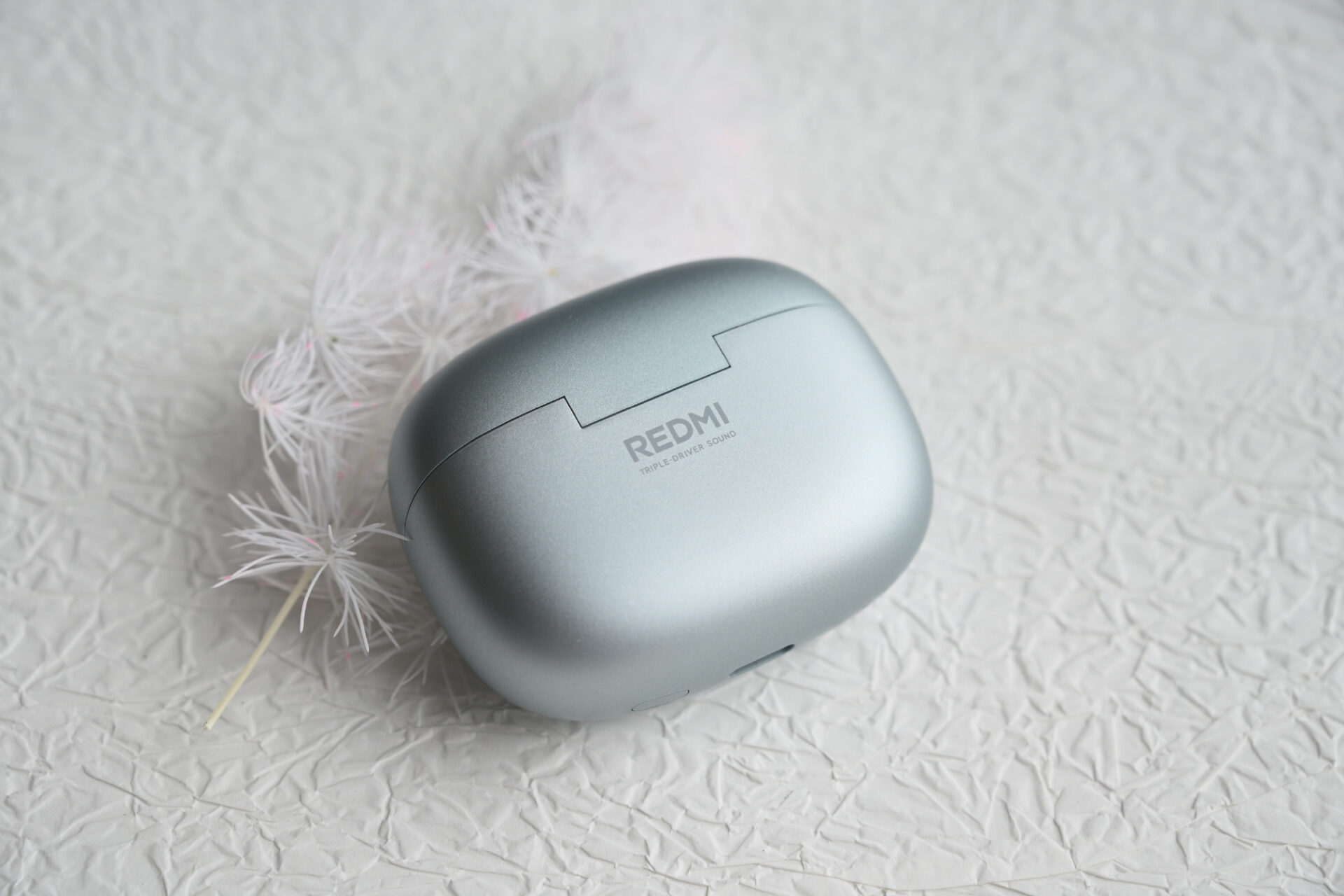

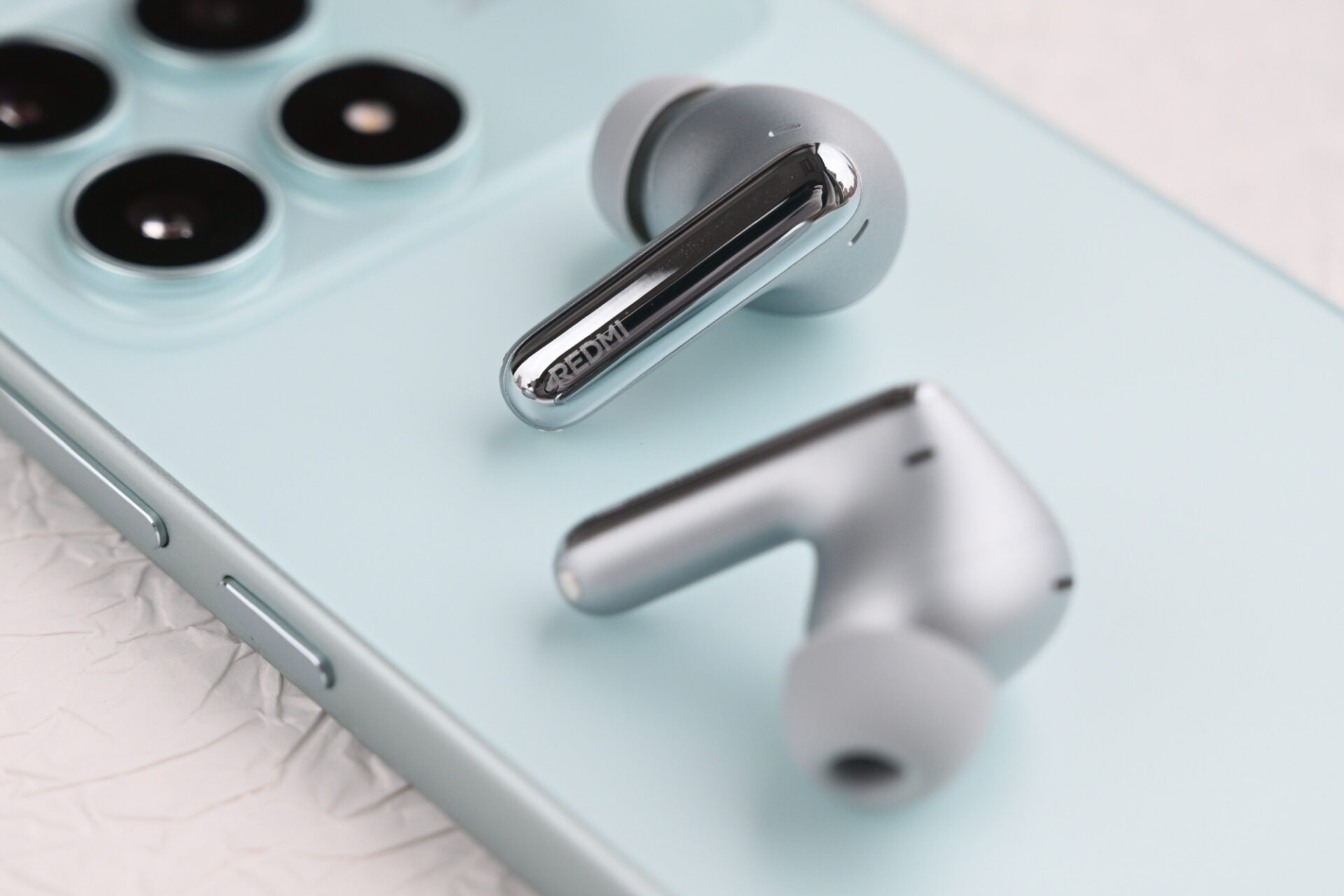
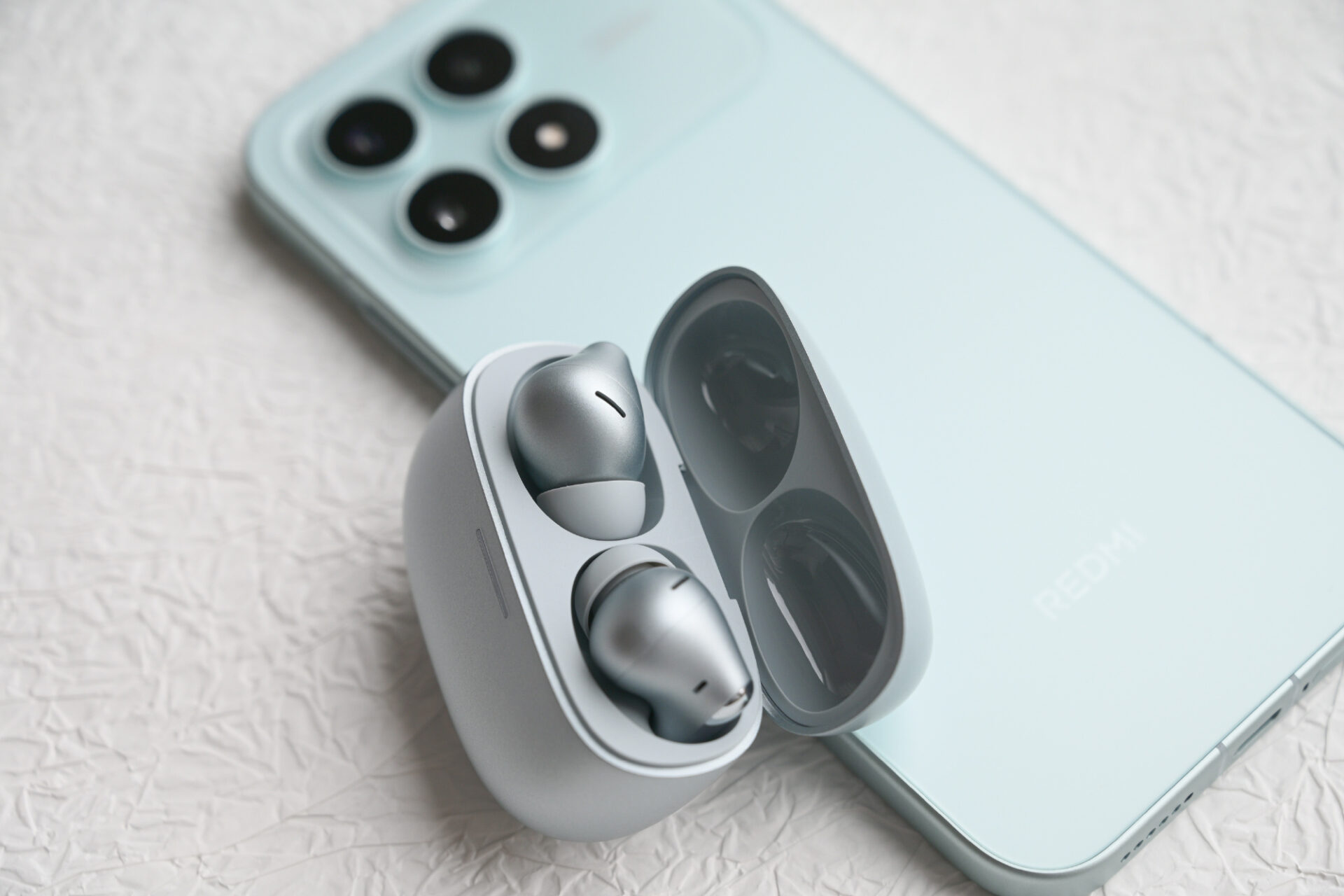
The earcups feature a unique curved, glossy outer cover. Unlike typical glossy plastics that instantly become fingerprint magnets, Redmi has used a metallic paint finish that adds a layer of sophistication and, surprisingly, resists fingerprints and smudges.

The «Misty Blue» color is particularly striking, offering a sleek and premium aesthetic. As for comfort, the earbuds are designed for extended listening sessions. Combined with IP54 dust and water resistance ratings , they’re ready for daily commutes and workouts.
Sound quality: A marvel of hardware
On paper, the audio configuration is overkill for this price segment. The Redmi Buds 8 Pro use a triple coaxial driver system :
-
11mm titanium-plated dynamic transducer (for bass)
-
Dual 6.7mm piezoelectric ceramic drivers (for treble and detail)
Powered by two independent DACs , this configuration allows for precise crossover between high and low frequencies. Support for LHDC 5.0 and LDAC codecs ensures high-resolution transmission, while Xiaomi’s proprietary MIHC protocol optimizes the experience for HyperOS users.



Laboratory analysis: Frequency response and distortion
Realab analyzed the technical data to verify the performance of these transducers.
Analysis:
-
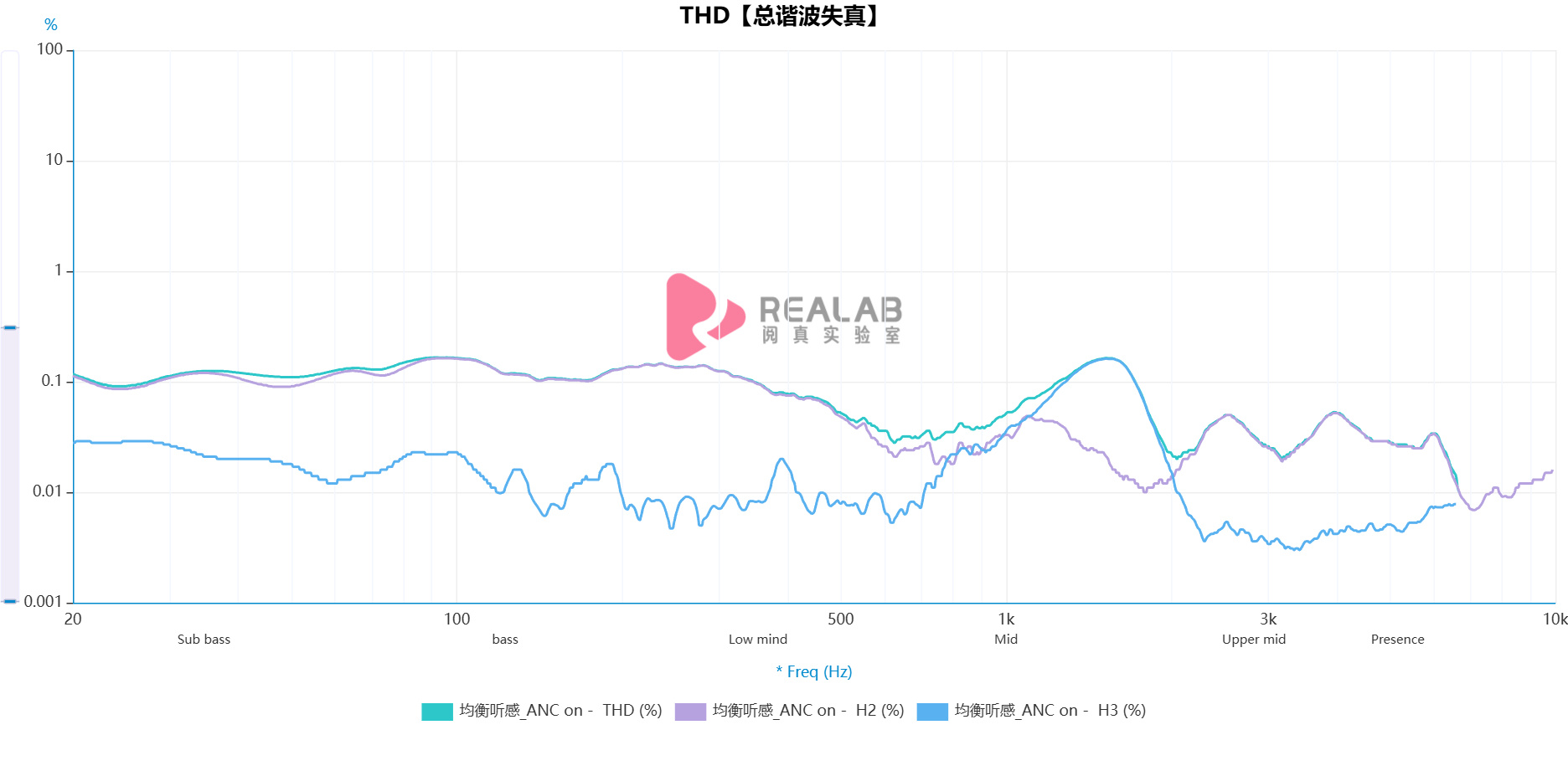
Bass (20 Hz – 200 Hz): The graph shows a noticeable boost in low frequencies. This confirms our listening tests: the bass is rich, full, and dynamic. While audiophiles might find it emphasizes volume, it avoids the muddy sound often found in budget headphones.
-
Midrange and treble (2 kHz – 10 kHz): This is where the ceramic transducers truly shine. The frequency response remains relatively smooth, with a presence peak around 3 kHz (essential for vocals) and good treble extension. This explains the «excellent clarity» and «refined midrange and treble» noted in user reviews.
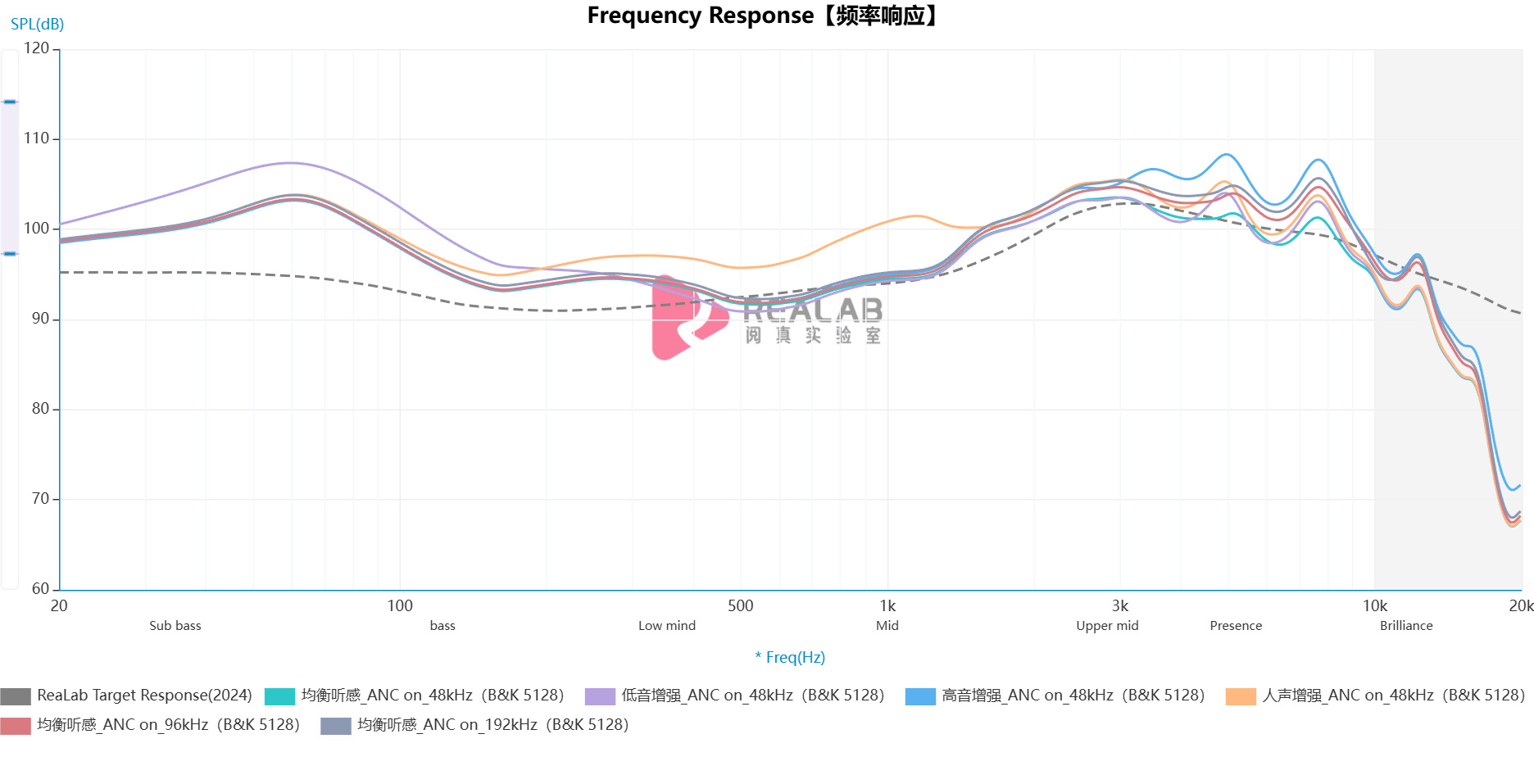
Analysis:
-
El gráfico THD es excepcionalmente limpio, con niveles de distorsión muy por debajo del 0,1% en la mayor parte del espectro audible. Esto significa que, incluso a volúmenes altos, la configuración de triple transductor mantiene la claridad sin introducir zumbidos ni artefactos ásperos.
Cancelación Activa del Ruido (ANC): El silencio del «espacio profundo
La característica principal es la Cancelación de Ruido Xiaomi Deep Space 3.0, que presume de una profundidad teórica de 55 dB y un ancho de banda de 5 kHz.
Análisis de laboratorio:
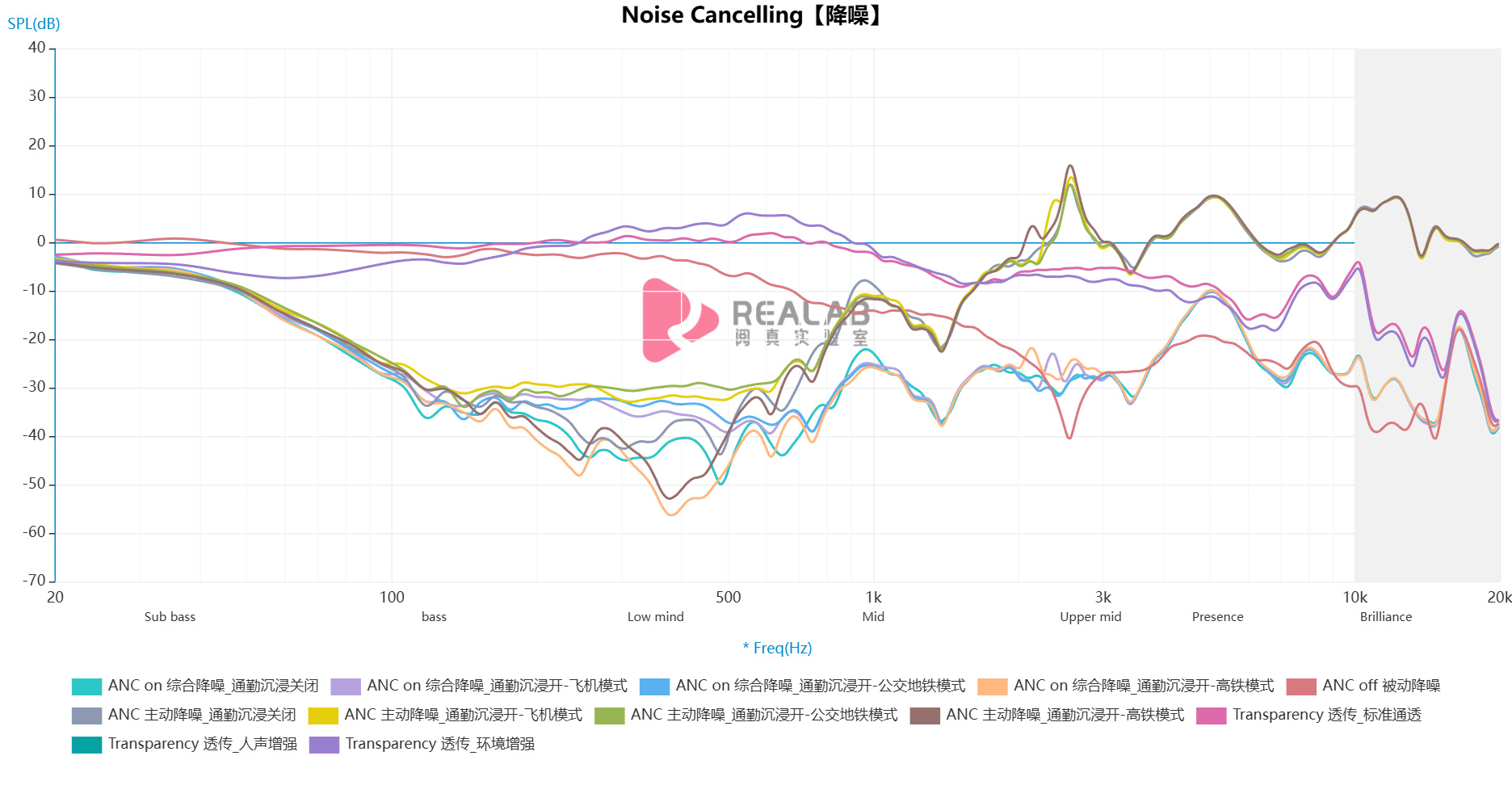
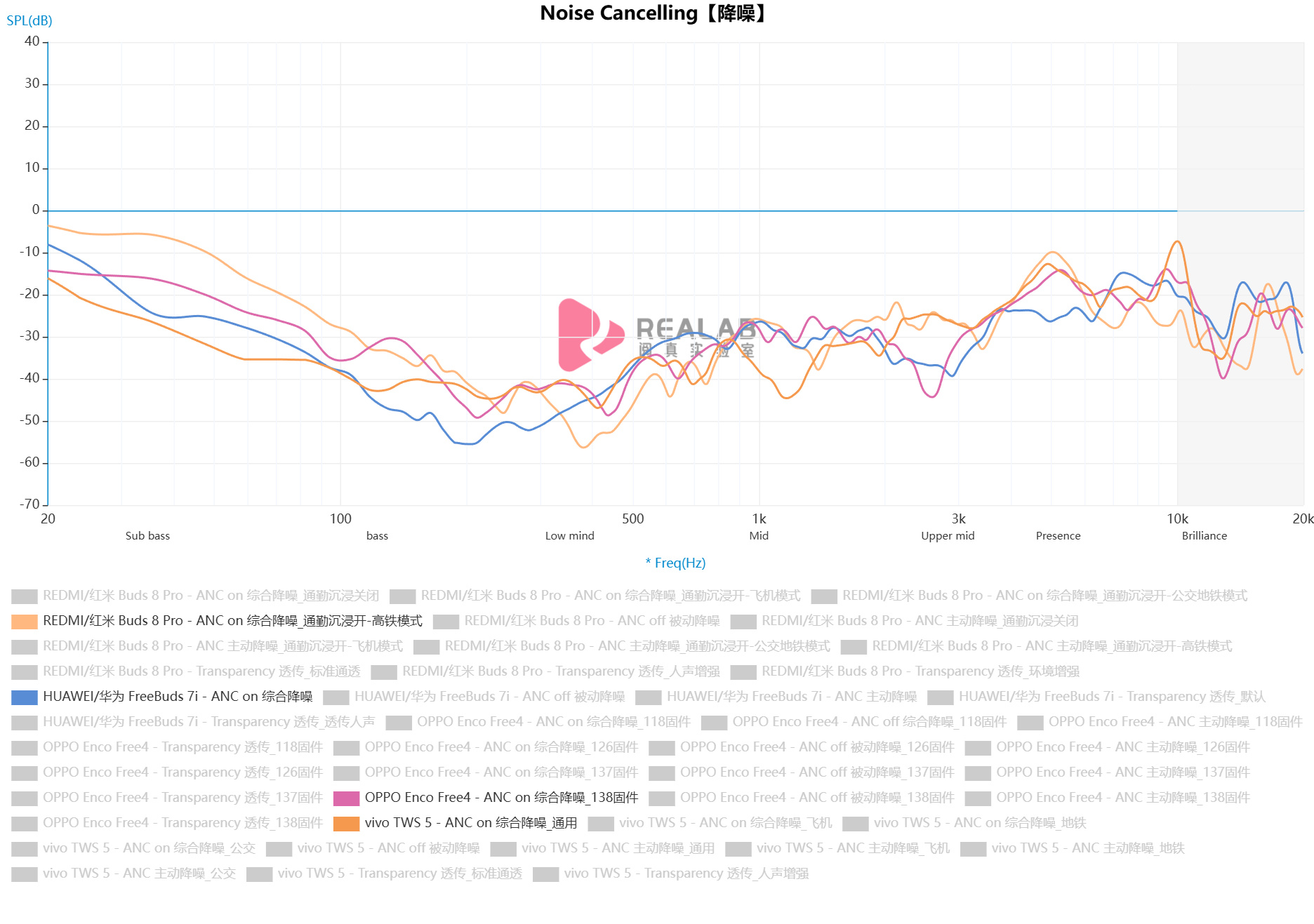
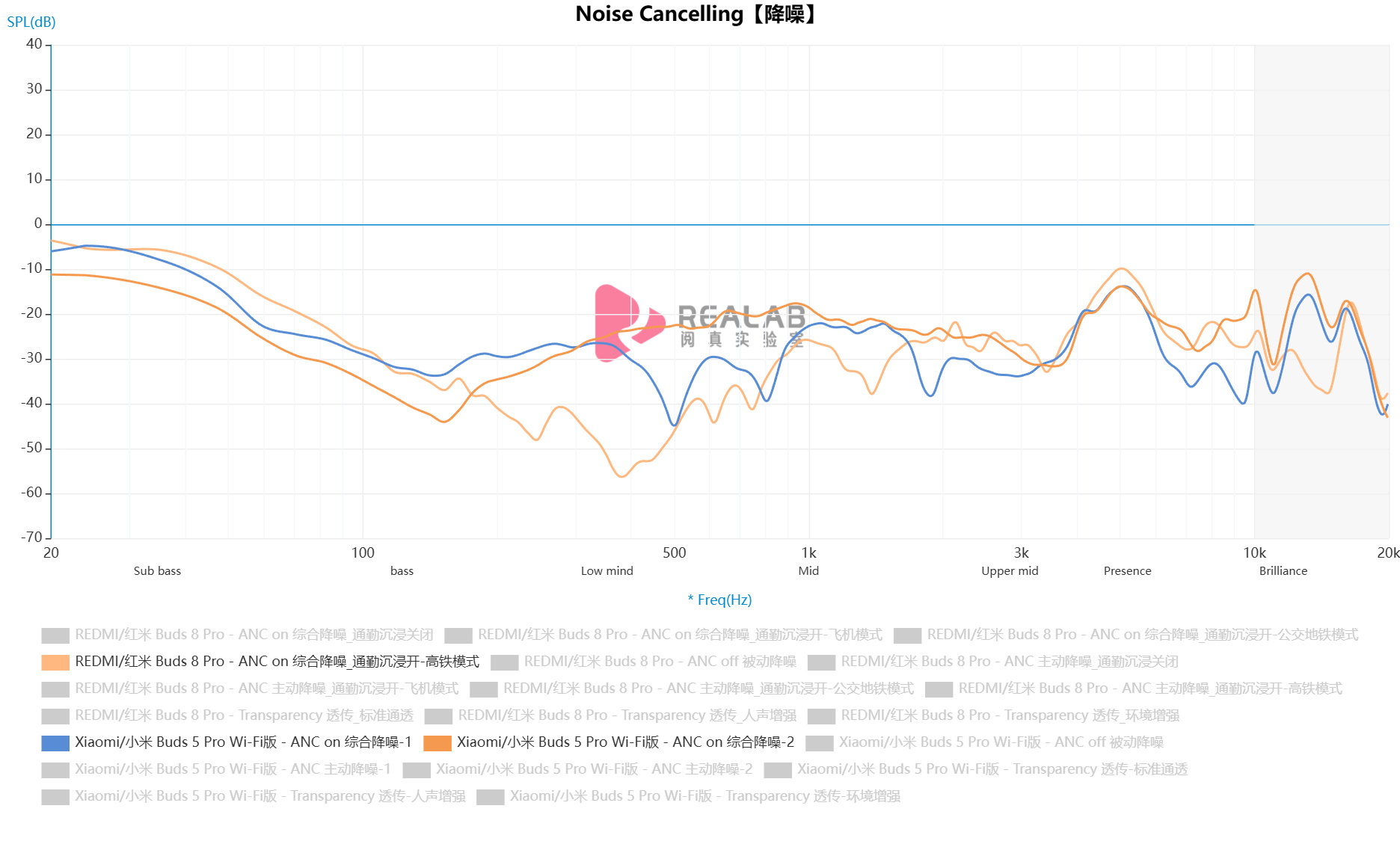
Observando los gráficos de cancelación de ruido, podemos ver una forma de «V» profunda en las frecuencias más bajas.
-
Rendimiento en bajas frecuencias: La cancelación disminuye significativamente entre 50 Hz y 500 Hz, borrando eficazmente el estruendo de los motores y las vías del metro.
-
Optimización de los desplazamientos: El «Modo Tren de Alta Velocidad» destaca por su rendimiento. Como se ve en los gráficos comparativos, los Redmi Buds 8 Pro (línea naranja) superan a competidores como los Huawei FreeBuds 7i y los vivo TWS5 específicamente en el rango 350Hz-800Hz. Este es el «punto dulce» para el parloteo humano y el zumbido de cabina, lo que hace que estos auriculares sean excepcionales para viajar.
Características
Para los usuarios del ecosistema Xiaomi, la integración es perfecta.
-
Sinergia HyperOS: El emparejamiento emergente es instantáneo, y los ajustes se integran directamente en el sistema operativo, eliminando la necesidad de una aplicación independiente.
-
Audio espacial: Los auriculares son compatibles con audio espacial para un sonido envolvente de 360 grados.
-
Conectividad: La conexión de doble dispositivo funciona a la perfección, lo que te permite alternar entre el portátil y el teléfono sin problemas.
Duración de la batería
El rendimiento de la batería es competitivo, aunque no líder del mercado.
-
Auriculares: ~8,5 horas con una sola carga.
-
Total (con funda): ~35 horas.
En pruebas reales con LHDC y ANC activados, sigue durando aproximadamente una hora más que los FreeBuds 7i.
Veredicto: ¿la nueva referencia económica?
Los REDMI Buds 8 Pro son un triunfo de la ingeniería de hardware. Aunque llegaron unos meses más tarde que sus principales rivales, lo compensan con una tecnología de controladores superior y un sistema ANC más inteligente y eficaz.
Ventajas:
-
T1-level audio: Triple coaxial transducers deliver clarity rarely seen for under $100.
-
Flagship ANC: 55 dB cancellation that excels in the vocal ranges (350-800 Hz).
-
Build quality: Premium metallic finish that resists fingerprints.
-
HyperOS integration: Perfect for Xiaomi/Redmi/POCO users.
Cons:
-
Bass tuning: The default tuning leans heavily towards bass (which can be fixed with an equalizer).
-
Competition: The price is slightly higher than that of competitors, who have lowered their prices over time.
For Xiaomi users, this is the only logical choice. It offers a «Pro» experience that justifies every penny of its 399 yuan price tag.